
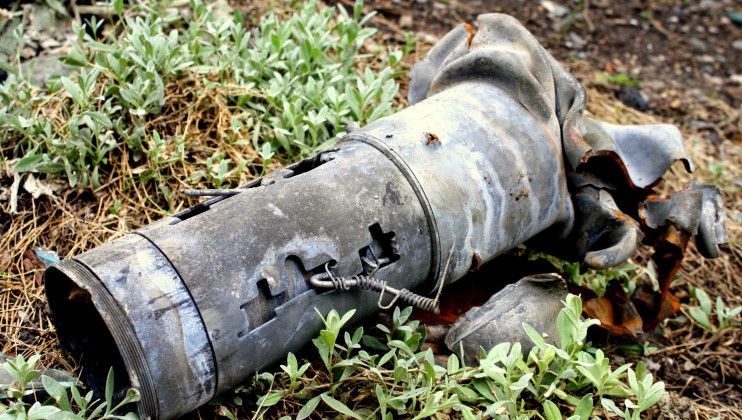
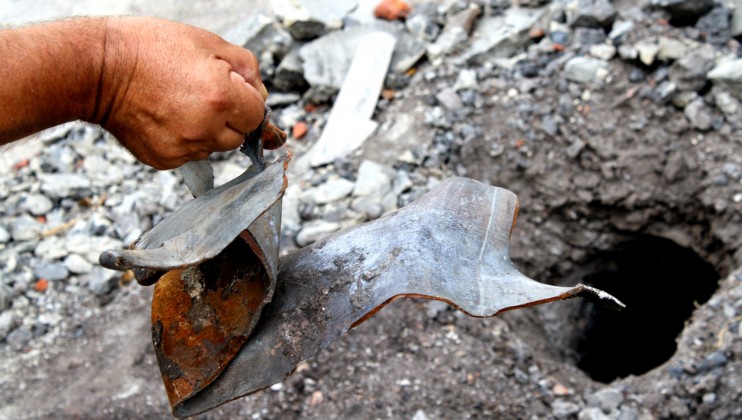
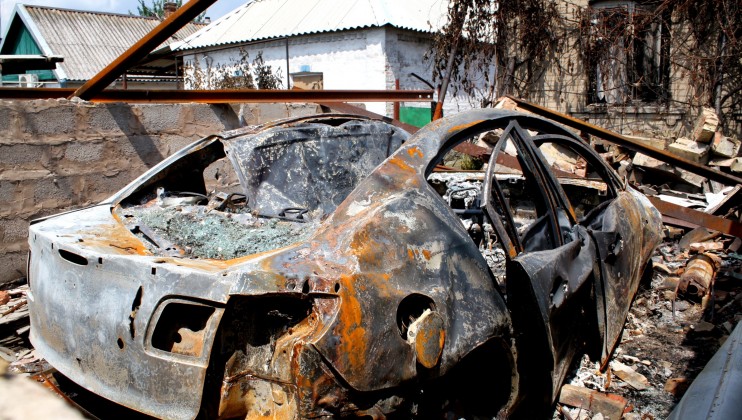
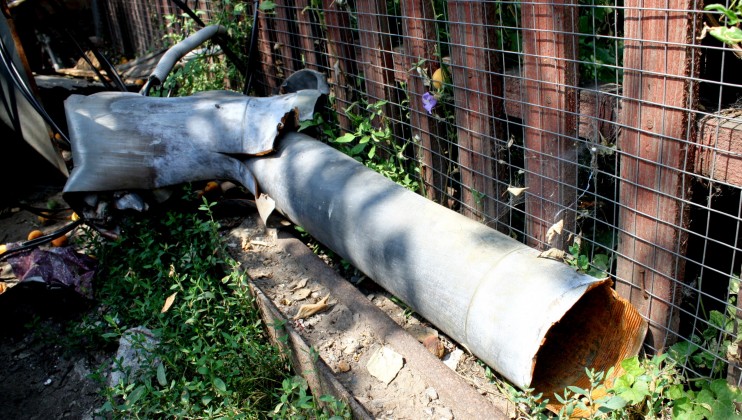
(Donetsk, July 25, 2014) – Unguided Grad rockets launched apparently by Ukrainian government forces and pro-government militias have killed at least 16 civilians and wounded many more in insurgent-controlled areas of Donetsk and its suburbs in at least four attacks between July 12 and 21, 2014, Human Rights Watch said today.
The use of indiscriminate rockets in populated areas violates international humanitarian law, or the laws of war, and may amount to war crimes.
Grads are unguided rockets that cannot be targeted accurately, and are often fired in salvos from multi-barrel rocket launchers to saturate a wide area. Human Rights Watch called on all parties to the conflict in eastern Ukraine, particularly Ukrainian government forces, to stop using Grad rockets in or near populated areas because of the likelihood of killing and wounding civilians. Insurgent forces should minimize the risk to civilians under their control by avoiding deploying forces and weapons in densely populated areas.
UKRAINE: UNGUIDED ROCKETS KILLING CIVILIANS
Feature
Duration
: 3m 14s






Related News

ENG
Tuesday, 12 May 2026
European Union: Surveillance Technology Sold to Rights Violators
EU Commission Needs to Strengthen Due Diligence, Transparency Rules

ENG
Monday, 27 April 2026
Inside Human Rights Watch Digital Investigation’s Lab
How HRW Uses the Latest Technology to Corroborate and Reconstruct Events and Draw Conclusions